

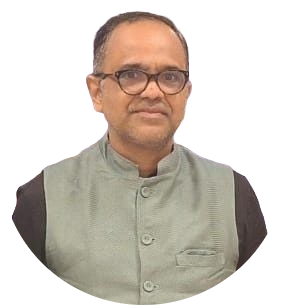
Prof.
Arbnor Pajaziti
University of Prishtina, Kosovo
Speech Title: Advances
in Intelligent Robotics and Human–Machine Collaboration: Recent
Research from the University of Prishtina
Abstract: This
talk will provide an overview of the recent research activities
carried out at the Department of Mechatronics, Faculty of
Mechanical Engineering, University of Prishtina, where our team
has been working at the intersection of robotics, artificial
intelligence, and intelligent automation. Over the last few years,
we have developed several robotic systems and mechatronic devices
aimed at addressing real practical needs in industry, healthcare,
and everyday life.
Among our major efforts are the development
of bio-inspired and prosthetic robotic hands designed to offer
more natural movement and control, as well as the creation of an
accessible mechanical ventilator that integrates smart sensing for
improved reliability in emergency situations. We have also been
exploring new concepts for automation lines that focus on
adaptability, efficiency, and ease of integration into existing
industrial environments. These projects reflect our broader goal
of building systems that are technically strong while also being
useful and impactful.
A significant part of our current work is
dedicated to bringing AI into robotic decision-making. By
combining machine learning approaches with multi-criteria decision
models such as our modified TOPSIS framework, we are enabling
robots to analyse complex environments, make informed decisions,
and operate with greater autonomy. We are also studying sensor
fusion and cognitive models to improve how robots perceive and
interpret the world around them.
The final part of the talk
will look toward the future of robotics, especially how robots can
move from simply operating near humans to actively cooperating
with them. This includes research on shared autonomy, safe
interaction, and adaptive learning, all of which are essential for
robots that work alongside people in healthcare, manufacturing,
and service applications.
This presentation will offer a clear
and integrated view of our ongoing contributions, while
highlighting the exciting possibilities ahead for collaborative
and intelligent robotic systems.
Biography: Prof. Dr.
Arbnor Pajaziti received the B.Sc. degree in Mechanical
Engineering from the University of Prishtina, Kosovo, the M.Sc.
degree from the University of Zagreb, Croatia, and the Ph.D.
degree in Robotics and Intelligent Control from the Vienna
University of Technology, Austria. He has been a Professor at the
Faculty of Mechanical Engineering, University of Prishtina “Hasan
Prishtina,” since 2010, where he also serves as Head of the
Department of Mechatronics.
He has extensive research experience in
robotics, mechatronics, artificial intelligence, and intelligent
control systems, including neural networks, fuzzy logic, and
evolutionary algorithms. Prof. Pajaziti has led several national
and international research projects in robotics and has authored
numerous scientific publications and textbooks in engineering and
technology.
His
current research interests include mobile robotics, autonomous
systems, intelligent motion control, and AI-driven robotic
applications.

Assoc. Prof. Ting Zou
Memorial University of
Newfoundland, Canada
Biography: Ting Zou received the B.Sc. degree in electrical engineering and the M.Sc. degree in automatic control engineering from Xi’an Jiaotong University, Xi’an, China, and the Ph.D. degree in robotics and mechatronics from McGill University, Montreal, QC, Canada. Afterward, she joined the Centre for Intelligent Machines of McGill University as a Postdoctoral fellow, working on the optimum design of the next-generation multi-speed transmissions for electric vehicles and nonlinear motion control of autonomous tracked vehicles for mining drilling operations. She is currently an Associate Professor with the Department of Mechanical and Mechatronics Engineering, Memorial University of Newfoundland, St. John's, NL, Canada. Her current research interests include mechanism design and control of biologically inspired robots, advanced human–robot interaction, machine learning for robotic applications, soft robots, and MEMS. Dr. Zou is a senior Member of the IEEE, and member of ASME, Canadian Society for Mechanical Engineers, and Canadian Committee for the Theory of Machines and Mechanisms.

Assoc.
Prof. Ajit Salunke
Don Bosco College of Engineering, India
Speech Title:
Intelligent Mechatronic Systems for Physical Property-Based
Quality Grading of Agricultural Edible Nuts: Integrating Machine
Vision and IoT
Abstract: Quality grading of agricultural
edible nuts is a critical post-harvest operation that directly
influences market value, processing efficiency, and consumer
acceptance. In many developing countries, grading of arecanuts,
cashew nuts, hazelnuts etc. is still predominantly performed
through manual inspection or surface appearance-based methods,
which are labor-intensive, subjective, and incapable of reliably
assessing internal quality attributes. Moreover, commonly used
color-based machine vision systems are highly sensitive to
lighting conditions and fail to capture intrinsic quality
characteristics such as moisture-related structural integrity.
These limitations highlight the need for an objective, scalable,
and non-destructive grading approach based on fundamental physical
properties.
This work presents an intelligent mechatronic
system for physical property–based quality grading of agricultural
edible nuts through the integration of machine vision, Internet of
Things (IoT), and microcontroller-based actuation. The proposed
system utilizes measurable physical parameters, namely true
density, bulk density, and porosity, as primary indicators of
kernel quality. These properties are known to correlate strongly
with internal attributes such as moisture content, maturity,
firmness, and processing suitability across a wide range of edible
nuts.
A dual-level grading architecture is implemented to
enhance efficiency and throughput. At the first level, IoT-enabled
bulk density measurement is used for batch-level preliminary
screening. A precision load cell integrated with a microcontroller
and cloud platform enables real-time data acquisition, remote
monitoring, and batch classification. Batches that satisfy
predefined quality thresholds proceed to the second level, where
individual kernel assessment is performed. At this stage, kernel
mass is measured using a load cell, while kernel volume is
estimated in real time using a dual-camera machine vision system.
Image segmentation techniques are employed to accurately handle
irregular kernel geometries, enabling precise volume computation
without physical contact.
True density is calculated from the
measured mass and estimated volume, and grading decisions are made
autonomously based on threshold values. Actuators controlled by
embedded controllers physically segregate kernels into accept and
reject categories, thereby completing the sensing–decision–action
loop characteristic of intelligent mechatronic systems.
The
system is experimentally validated using unboiled arecanut kernels
as a representative case study, owing to their irregular shape,
wide size variation, and economic importance. Validation results
demonstrate a volume estimation accuracy of 97.33% using the
segmentation-based image processing method, with overall grading
accuracy ranging between 95% and 99%. Statistical analyses,
including paired t-tests, regression analysis, and Bland–Altman
plots, confirm strong agreement between automated measurements and
conventional reference methods, as well as size-independent
performance.
The proposed approach overcomes key limitations of
manual and color-based grading systems by enabling objective
assessment of internal quality attributes, reducing dependence on
skilled labor, and ensuring consistent, repeatable grading
outcomes. Owing to the universal relationship between physical
properties and quality, the framework is readily extendable to
other edible nuts such as cashews, almonds, walnuts, hazelnuts,
and pistachios with appropriate calibration.
Overall, this work
establishes a robust and scalable foundation for intelligent,
physical property–based quality grading in post-harvest nut
processing, offering significant potential for industrial adoption
and digital transformation in agricultural value chains.
Biography: Dr. Ajit
Salunke is an Associate Professor in Mechanical Engineering at Don
Bosco College of Engineering (DBCE), Fatorda, Goa, India. He has
served as HOD for 10 years and as Officiating Principal for a
year. He holds a PhD from Visvesvaraya Technological University
(VTU), Belagavi, India, along with an M.Tech in Computer
Integrated Manufacturing and Bachelor’s degree in Mechanical
Engineering. His current research interests include physical
property-based quality grading and process optimization of
agricultural edible nuts, machine vision, and IoT-based data
monitoring and control systems.
With over 26 years of professional
experience, Dr. Salunke has organized more than 100 workshops/
seminars/ invited talks on robotics, additive manufacturing,
virtual instrumentation, computer-aided engineering analysis, and
smart technologies for Industry 4.0. He has published several
research papers in peer-reviewed international
journals and reputed conferences, including the ICMCR 2025 held at
the National University of Singapore.
A Fellow of the Institution of Engineers
(India) and Life Member of ISTE, NIPM, AMIEE, and VIBHA, Dr.
Salunke received the CSI TechNext “Best HOD of the Year” Award
(2017) at IIT Mumbai. He contributes as a resource person for
Vidnyan Dhara program of the Directorate of Higher Education -
Government of Goa, and Science Film Festival of India.
Assoc. Prof. Kei Fujisawa
Yokohama National University, Japan
Speech Title: Online Regime-Transition
Monitoring of Erosion in Nuclear Power Plants Using Kalman
Filtering
Abstract: High-speed liquid jet impacts can cause
erosion in industrial components such as piping in nuclear power
plants. Recent studies indicate that the liquid jet impact force
on a target varies with transitions between erosion stages, yet
robust identification of these transitions from noisy force
signals remains challenging. In the present study, impact force
signals were monitored using a force sensor attached to an
aluminum specimen under high-speed liquid jet impingement and
analyzed using an online regime-transition monitoring framework
based on a state-space approach. A local linear trend Kalman
filter was employed with a two-dimensional state consisting of the
force level and its rate of change. Erosion regime transitions
were detected by combining velocity-based rise criteria with
statistical significance and a minimum level increase with
two-dimensional kernel density estimation. The proposed framework
offers an interpretable and robust tool for erosion-stage
transition monitoring based on mechatronic sensing and state-space
signal processing.
Biography: Kei Fujisawa is a researcher specializing in data-driven condition monitoring, state-space modeling, and statistical signal processing for safety-critical industrial systems. His recent work addresses erosion caused by high-speed liquid jet impacts in industrial components such as nuclear power plant piping. Using force-sensor measurements under jet impingement, he develops an interpretable online regime-transition monitoring framework based on a state-space approach, employing a local linear trend Kalman filter with a two-dimensional state and transition detection using velocity-based criteria and two-dimensional kernel density estimation. At the conference, he will present deployment-oriented results on online erosion monitoring using Kalman filtering.

Assoc. Prof. Shuqiong Wu
University of Osaka, Japan
Speech Title:
Dual-task–based Software as a Medical Device for Detecting
Early-Stage Cognitive Impairment
Abstract: Cognitive
impairment has emerged as a major challenge in aging societies
worldwide. Dementia, a common form of cognitive impairment, begins
with subtle symptoms and progressively leads to loss of
independence, with no curative treatment currently available.
However, early detection during the Mild Cognitive Impairment
(MCI) stage, an intermediate state between normal cognition and
dementia, enables timely intervention that can slow disease
progression. Existing diagnostic tools, such as MRI and PET-CT,
are costly and unsuitable for frequent monitoring, while
paper-based screening tests (e.g., MMSE) suffer from practice
effects that limit their effectiveness for continuous assessment.
To overcome these limitations, we propose a dual-task-based
assessment system combining a motor task (gait) and a cognitive
task (calculation). Individuals with MCI exhibit increased gait
instability under dual-task conditions due to elevated cognitive
load. By analyzing multimodal performance data acquired during
dual-task assessment, the proposed system achieves more accurate
early-stage cognitive impairment detection than conventional
paper-based tests, demonstrating its potential as a practical
software-based medical assessment tool.
Biography: Shuqiong Wu was born in Shanxi, China, in 1985. She received her B.E. and M.E. degrees from Beihang University, Beijing, China, in 2008 and 2011, respectively. She obtained her Ph.D. degree in Computational Intelligence and Systems Science from the Institute of Science Tokyo, Tokyo, Japan, in 2015. From 2015 to 2020, she was a research fellow at the Graduate School of Informatics, Kyoto University. From 2020 to 2025, she served as an assistant professor at SANKEN (The Institute of Scientific and Industrial Research), the University of Osaka. She is currently an associate professor at the Graduate School of Engineering Science, the University of Osaka. Her current research topics include dualtask-based cognitive impairment detection, cognitive status monitoring, medical image reconstruction, and contactless biometric sensing. Her research interests include biomedical signal processing, image processing, three-dimensional reconstruction, pattern recognition, and machine learning.

Assoc. Prof. Sunilkumar S. Honnungar
SDM College of Engineering & Technology (SDMCET), India
Biography: Dr.
Sunilkumar S. Honnungar is an accomplished academic leader and
researcher with 23+ years of experience spanning mechanical
engineering education, advanced manufacturing research, and
strategic industry–academia collaboration. He currently serves as
Associate Professor of Mechanical Engineering and Training &
Placement Officer at SDM College of Engineering & Technology
(SDMCET), Dharwad, India.
His core expertise covers thermal
error minimization in CNC machine tools, feed-drive system thermal
behavior, CFD-based analysis of precision manufacturing equipment,
advanced and bio-compatible materials, automated quality
assessment using image processing, and sustainable manufacturing
and clean energy integration. Through his work, he has contributed
significantly to improving precision, reliability, and
sustainability in modern manufacturing systems.
Dr. Honnungar
has a strong international research footprint, with 13
international journal publications and multiple international and
national conference papers in reputed venues such as African
Journal of Food, Agriculture, Nutrition and Development, Materials
Today: Proceedings, AIP Conference Proceedings, International
Journal of Scientific & Technology Research, IRJET, and Applied
Engineering Research. He has also published on topics including
thermal behaviour of ball-screw systems, thermal error
minimization in CNC machine tools, CFD simulation of spark
ignition engines, bio-compatible implants, and work-cell based
manufacturing systems.
He has guided three PhD scholars
(part-time, VTU Belagavi) in the domains of automated quality
grading of areca nuts, welding of dissimilar metals, and
bio-compatible material characterization, with one thesis already
submitted and others in advanced stages. In addition, he has
mentored numerous undergraduate and postgraduate projects aligned
with industrial problems and advanced simulation-based research in
mechanical and manufacturing engineering.
Dr. Honnungar’s
leadership extends to international academic platforms; he has
served as Session Chair at the 3rd International Conference on
Mechatronics, Controls & Robotics (ICMCR 2025) scheduled from
14–16 February 2025 at the National University of Singapore (NUS),
Singapore. This role reflects his recognition as an expert in
advanced engineering systems and his active engagement with the
global research community.
At the institutional and
professional level, he has coordinated and led several major
conferences such as the National Conference on Global Emerging
Technologies (Electric Mobility, Industry 4.0, Sustainability,
2024) and the PRIME series (Progress and Research Trends in
Mechanical Engineering, 2016/2019/2022), along with TEQIP, AICTE
and ISTE-sponsored FDPs and STTPs on topics including
computational analysis, pedagogy, and advanced manufacturing. He
has also been instrumental in designing and executing training and
placement strategies that enhance graduate employability.
His
contributions have been recognized through multiple awards,
including the S.R. Gollapudi Award for Dynamic & Service-Oriented
Leadership and Academic Excellence in Industrial Engineering
(IIIE, Mumbai, 2019), a Special Award from IIIE for bridging
academia and industry (2017), the Catalyze Tech Innovation
Challenge Award (Global Center of Excellence in Affordable & Clean
Energy, IIT Dharwad & SELCO Foundation, 2022), and the Best Co
ordinator Award from the LEAD (Deshpande Foundation, 2013). He
currently serves as Managing Committee Member, SAE India –
Bangalore Section (2025–2026) and Board of Studies Member, Indian
Institution of Industrial Engineering (IIIE, Mumbai, 2024–2026).

Asst. Researcher Kuo-Chin Jong
National Institutes
of Applied Research, Taiwan
Speech Title: Patent Landscape Analysis
of eVTOL Technologies
Abstract: The rapid development
of electric vertical takeoff and landing (eVTOL) aircraft has
led to concentrated innovation around specific technical
modules. Using a contour-based patent mapping approach, this
study identifies clusters of eVTOL-related patents across core
categories: flight control, electric propulsion, battery
systems, thermal management (radiators), supply systems,
fuselage and power assemblies, and pilot input/flight path
control. Among these, flight control and electric propulsion
emerge as contested domains where most players converge, while
thermal management and supply systems appear as relatively
underexplored areas, indicating potential blue-ocean
opportunities.
Biography: Dr. Kuo-Chin Jong received his Ph.D. degree in
Photonics and Optoelectronics from National Taiwan University,
Taipei, Taiwan, in 2010. He is currently an Assistant
Researcher at the Science & Technology Policy Research and
Information Center, National Institutes of Applied Research,
Taipei, Taiwan.
His research focuses on patent landscape
analysis, innovation strategy, and emerging technology policy.
In particular, he is interested in developing purpose-driven
innovation models and applying them to strategic foresight,
enabling policymakers and industry leaders to better
understand the evolving dynamics of advanced technologies such
as electric vertical takeoff and landing (eVTOL) aircraft. Dr.
Jong actively integrates patent analytics with innovation
frameworks to provide actionable insights that bridge science,
technology, and policy.

Asst. Prof. John Carlo Torres
National University–Lipa, Philippines
Speech Title: Robotics
Education as the Foundation of the Philippine Robotics Ecosystem
Abstract: Robotics education plays a critical role in shaping
national innovation capacity, workforce readiness, and
technological sustainability. This talk presents a strategic
academic perspective on how robotics education serves as the
foundation of the emerging Philippine robotics ecosystem. It
discusses the alignment of curriculum design, faculty development,
laboratory infrastructure, and industry-academe-government
collaboration in building a sustainable robotics pipeline. The
presentation highlights current initiatives, challenges, and
opportunities in integrating mechatronics, control systems,
artificial intelligence, and automation into engineering and
computing programs. Data-driven educational strategies,
institutional partnerships, and policy-driven frameworks are
examined as key enablers of ecosystem growth. Case studies from
Philippine higher education institutions and national programs are
presented to illustrate effective practices and impact. The talk
concludes with future directions toward strengthening robotics
research, innovation, and talent development to position the
Philippines competitively within the global robotics landscape.
Biography: Engr. John
Carlo Torres, CCpE, is an Assistant Professor at National
University–Lipa, Philippines, and is currently pursuing his Doctor
in Information Technology (DIT) at National University,
Philippines. He earned his Bachelor of Science in Computer
Engineering from Batangas State University – The National
Engineering University and his Master of Science in Information
Technology from Lyceum of the Philippines University – Batangas.
He has more than three years of
professional IT industry experience as an administrator and
consultant, and over four years in academia as professor. His
expertise covers artificial intelligence, machine learning,
computer vision, embedded systems, robotics, and automotive
technologies.
Engr.
Torres has published and presented several research papers in
areas such as convolutional neural networks, autonomous vehicle
systems, AI-driven solutions, and industry–academia collaboration.
An internationally invited speaker, mentor, and robotics coach, he
delivers seminars and workshops on embedded systems, programming
logic, machine learning, and automotive technologies, inspiring
emerging engineers to innovate in mechatronics, control, and
robotics.

Dr.
Wesley Chorney
Mississippi State University, USA
Biography: Wesley
Chorney received a B.Sc. (hons) mathematics from Simon Fraser
University, a M.Sc. in data science from the University of
Edinburgh, and a Ph.D. in computational engineering from
Mississippi State University.
His research predominantly
focuses on the use of artificial intelligence methods applied to
the healthcare field, with a special interest in risk assessment
and robotics in cardiothoracic surgery. He has published research
in robotics, combinatorial quantum field theory, artificial
intelligence in medicine, and artificial intelligence in
agriculture.

Dr.
Yuxiang Zhang
National University of Singapore, Singapore
Biography: Yuxiang Zhang received the B.S. and Ph.D. degrees in automotive engineering from Jilin University, Changchun, China, in 2016 and 2022, respectively. Since 2021, she has been a joint Ph.D. Student and a Research Fellow with the Department of Electrical and Computer Engineering, National University of Singapore, Singapore. Her current research interests include learning- based and model-based optimization methods for intelligent planning and control. Dr. Zhang has been an awardee of the Eric and Wendy Schmidt AI in Science Postdoctoral Fellowship with the Department of Electrical and Computer Engineering, National University of Singapore, since 2025.