Keynote Speakers

Prof. Graziano Chesi
Fellow of the IEEE, AAIA and AIIA
The University of Hong Kong, China
 
Biography: Graziano Chesi is a full professor at the Department of Electrical and Electronic Engineering of the University of Hong Kong. He received the Laurea in Information Engineering from the University of Florence and the PhD in Systems Engineering from the University of Bologna. He served as associate editor for various journals, including Automatica, the European Journal of Control, the IEEE Control Systems Letters, the IEEE Transactions on Automatic Control, the IEEE Transactions on Computational Biology and Bioinformatics, and Systems and Control Letters. He founded the Technical Committee on Systems with Uncertainty of the IEEE Control Systems Society. He also served as chair of the Best Student Paper Award Committees of the IEEE Conference on Decision and Control and the IEEE Multi-Conference on Systems and Control. He authored the books "Homogeneous Polynomial Forms for Robustness Analysis of Uncertain Systems" (Springer, 2009), "Domain of Attraction: Analysis and Control via SOS Programming" (Springer, 2011) and "LMI-Based Robustness Analysis in Uncertain Systems" (Now Publishers, 2024). He is a Fellow of the IEEE, AAIA and AIIA.


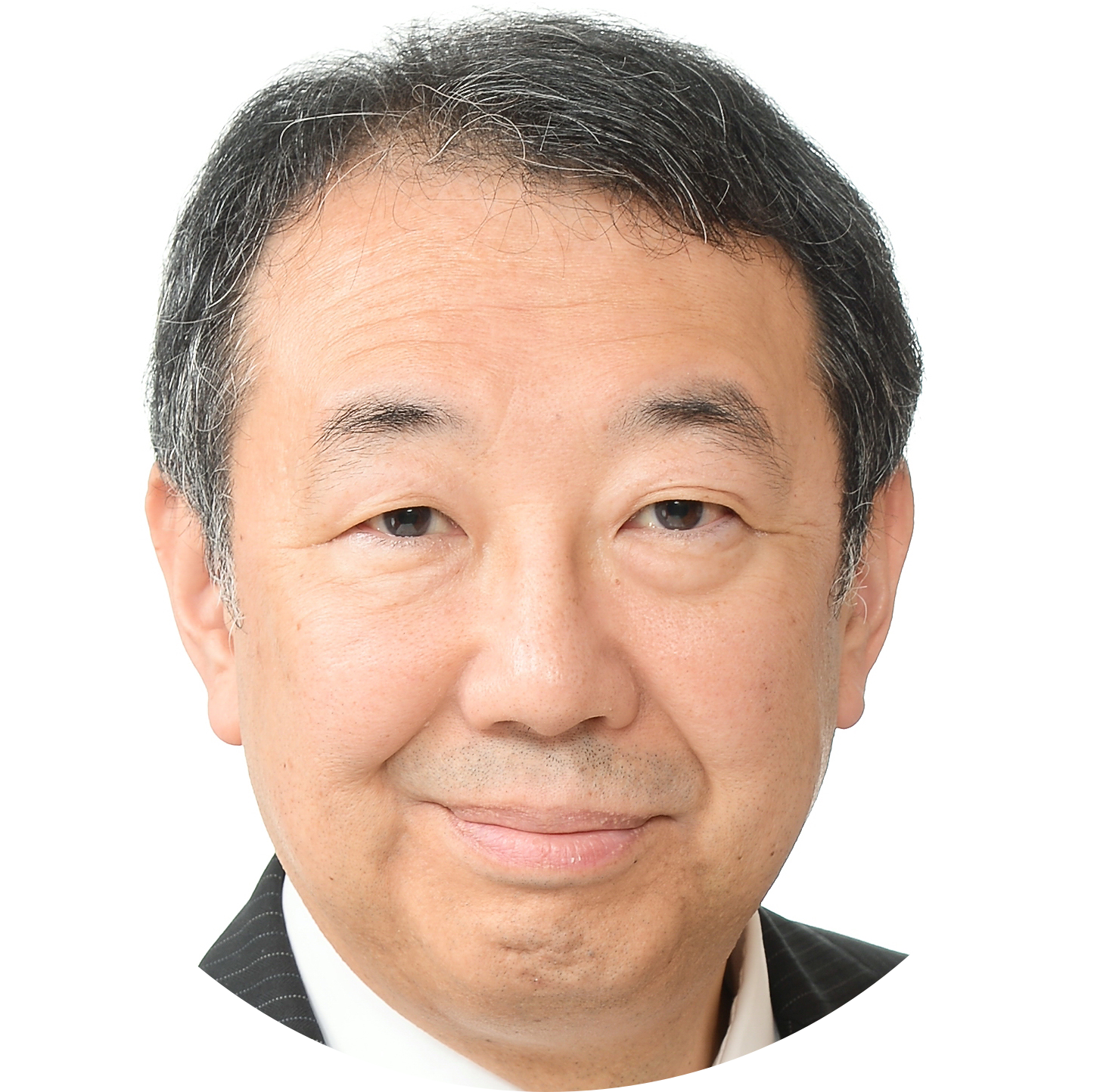
Prof. Hajime Asama
Fellow of IEEE, JSME, RSJ and SICE
The University of Tokyo, Japan


Biography: Hajime Asama is Emeritus Professor of the University of Tokyo. He received M. S. in 1984, and Dr. Eng. in 1989 from UTokyo. He worked at RIKEN, Japan from 1986 to 200, became a professor with the Research into Artifacts, Center for Engineering (RACE) of UTokyo in 2002, a professor of the School of Engineering of Utokyo from 2009 to 2024, and the Director of RACE from 2019 to 2023. Currently, he is a project professor at Tokyo College, UTokyo.
He received the JSME Award (Technical Achievement) in 2018, etc. He was an AdCom Member of the IEEE Robotics and Automation Society (2007-2009), the Vice President of RSJ (2011-2012), a Council Member of the Science Council of Japan (2017-2023), the President of IFAC (2020-2023), the Vice President of JSME (2023). He is a fellow of IEEE, JSME, RSJ and SICE.
His main interests are research and development of service robotics, distributed autonomous robotic systems, and embodied brain science, as well as social acceptance of the robot technologies.


Prof. Genci Capi

Hosei University, Japan


Speech Title: Non-Invasive Brain–Robot Interfaces: Recent Advances in Neural Decoding and Intelligent Control

Abstract: Brain–robot interface (BRI) technologies integrate neuroscience, robotics, and artificial intelligence to enable direct communication between the human brain and external systems. Recent progress in non-invasive neural sensing and machine learning has significantly accelerated the practical deployment of these systems, opening new opportunities in healthcare, rehabilitation, assistive robotics, and human–machine interaction.

This talk presents recent research advances from our laboratory on non-invasive BRI systems based on electroencephalography (EEG). We focus on improving neural decoding accuracy and system robustness while maintaining usability across diverse user populations. In particular, we introduce learning frameworks that leverage contrastive learning to extract discriminative representations and generate visual features directly from EEG signals.

Furthermore, we demonstrate real-time robotic control driven by brain signals, highlighting approaches that support intuitive and adaptive human–robot collaboration. These developments illustrate the growing potential of non-invasive brain–robot interfaces to improve human capabilities, enable natural interaction with intelligent systems, and contribute to the next generation of neuro-robotic technologies.

Biography: Genci Capi received the Ph.D. degree from Yamagata University, in 2002. He was a Researcher at the Department of Computational Neurobiology, ATR Institute from 2002 to 2004. In 2004, he joined the Department of System Management, Fukuoka Institute of Technology, as an Assistant Professor, and in 2006, he was promoted to Associate Professor. He was a Professor in the Department of Electrical and Electronic Systems Engineering, at the University of Toyama up to March 2016. Now he is a Professor in the Department of Mechanical Engineering, Hosei University. His research interests include intelligent robots, BMI, multi-robot systems, humanoid robots, learning and evolution.